Liquor Chain Management
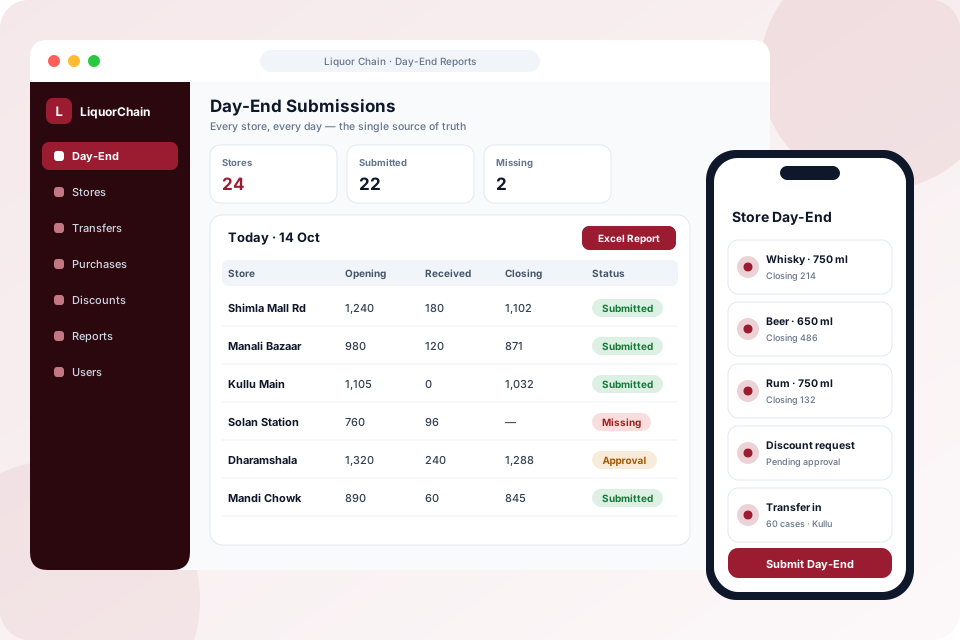
Built for liquor chains under Himachal Pradesh Excise rules. Stores count stock once a day. That day-end form is the source of truth — there is no point of sale.
Stores · Day-End · Compliance
What we deliver
Liquor Chain Management is a multi-store platform from Karan Infosys for liquor retail chains under Himachal Pradesh Excise rules. Version 4 has no point of sale: store staff do not ring up individual sales. Each store submits a daily day-end stock form, and sales are derived from that reconciliation. The form auto-fills opening stock, purchases, and transfers; staff enter full-price sales, wastage, and the physical count. Head office gets inventory, inter-store transfers, purchase orders and GRNs, real-time discount approvals, selling prices, and eight Excel reports — all from day-end data. Login is a 10-digit mobile number, on web, Android, and iOS, with offline queuing.
Related solutions
Compliance and Control, Store by Store
Standardise day-end reporting and approvals across every outlet in the chain.
Day-End Is the Books
Opening stock, purchases, and transfers fill in automatically. Staff enter full-price sales, wastage, and the physical count. Any variance needs a written reason before submit.
Real-Time Discount Workflow
Store staff request discounts and managers approve or reject them in real time, so pricing stays controlled and accountable.
Eight Excel Reports
Compliance and finance reports are built only from day-end data and download as Excel. A nightly job flags stores that never submitted.
Role-Based Access
A clean three-role model separates store users, managers, and administrators — each sees exactly what they should.
Mobile-Number Login
Staff sign in with their mobile number — fast and friction-free for store teams on the shop floor.
Stock, Transfers & Purchases
Stock per store, inter-store transfers with PDF challans, and — for super admins — purchase orders, goods received notes, and returns that update the day-end.
Standardised Reporting the Regulator Expects
Designed around state excise requirements, the system turns messy, store-by-store record keeping into one disciplined day-end process — so audits and reconciliations are painless.
Standardise Your Chain
3
Roles — store user, manager, admin
1
Day-End Form — the single source for every report
Web, iOS, and Android from one codebase, with a real-time server backend.
Everything Included in Liquor Chain Management
Store Operations
- One structured day-end stock form per store, per day
- Opening stock, purchases and transfers fill in automatically
- Staff enter full-price sales, wastage and the physical count
- Any variance needs a written reason before submission
- Discount requests raised from the store
- Mobile-number login for store staff
Head-Office Control
- Real-time discount approval or rejection by managers
- Selling price management across the chain
- Stock visibility for every store
- Inter-store transfers with PDF challans
- Purchase orders, goods received notes and returns
- Three roles: store user, manager and administrator
Reporting & Compliance
- Built for Himachal Pradesh Excise rules
- Eight compliance and finance reports, downloadable as Excel
- Every report built only from submitted day-end data
- Nightly job flags stores that did not submit
- No point-of-sale needed — sales are derived from reconciliation
Technology Behind the Platform
 Flutter
 Node.js
 PostgreSQL
 Docker
Common Questions
How does day-end reporting work?
Each store submits one structured day-end form daily. Every chain-level report is built from that data, so head office always has consistent, comparable numbers across stores.
Can managers control discounts in real time?
Yes — store staff raise discount requests and managers approve or reject them live, keeping pricing accountable without slowing the counter down.
Can it be adapted to our state's excise rules?
Yes — the day-end forms and reports are configurable, so we can align the system to your state's excise requirements and your chain's processes.
Do stores need a point-of-sale terminal?
No. Stores do not ring up individual sales. Each store submits one day-end form, and sales are derived from the reconciliation of opening stock, receipts and the physical count.
What happens if a store forgets to submit?
A nightly job flags every store that has not submitted its day-end, so head office can follow up before reports are affected.
How are transfers between stores recorded?
Inter-store transfers are created in the system with a PDF challan, and they flow automatically into the day-end of both the sending and receiving store.